New Clients:
Get 8 FREE Hours of Professional Home Care

.webp)
Get 8 FREE Hours of Professional Home Care
Parkinson's disease affects more people than many families realize. According to the Parkinson's Foundation, an estimated 1.1 million people in the U.S. are currently living with Parkinson's disease, and nearly 90,000 new cases are diagnosed every year. For families in Sacramento and the surrounding communities, a diagnosis often raises an immediate and deeply personal question: how do we make sure our loved one is safe, comfortable, and supported at home?
In-home Parkinson's care is one of the most practical answers to that question. Rather than uprooting a person from the home they know, personalized in-home support brings structured, consistent care directly to them.
Parkinson's disease is a progressive neurological condition that affects movement, balance, speech, and, over time, cognitive function. Because no two people experience Parkinson's the same way, effective care requires caregivers who understand the condition's specific demands: how tremors and rigidity affect daily tasks, how medication timing influences symptom control, how communication challenges develop, and how to support a person's dignity while managing increasing physical limitations.
At Noah's Dove, our caregivers are trained to provide condition-aware support that adapts as our clients' needs evolve. That distinction matters enormously for families navigating a Parkinson's diagnosis for the first time.
Understanding what our caregivers are specifically trained to manage helps families know what to expect from the start.
Mobility and fall risk are among the most serious concerns in Parkinson's care. The condition affects gait and balance, making falls a constant hazard. Our team provides hands-on support during movement, assists with transfers between bed and chair, and helps identify environmental hazards before they become dangerous.
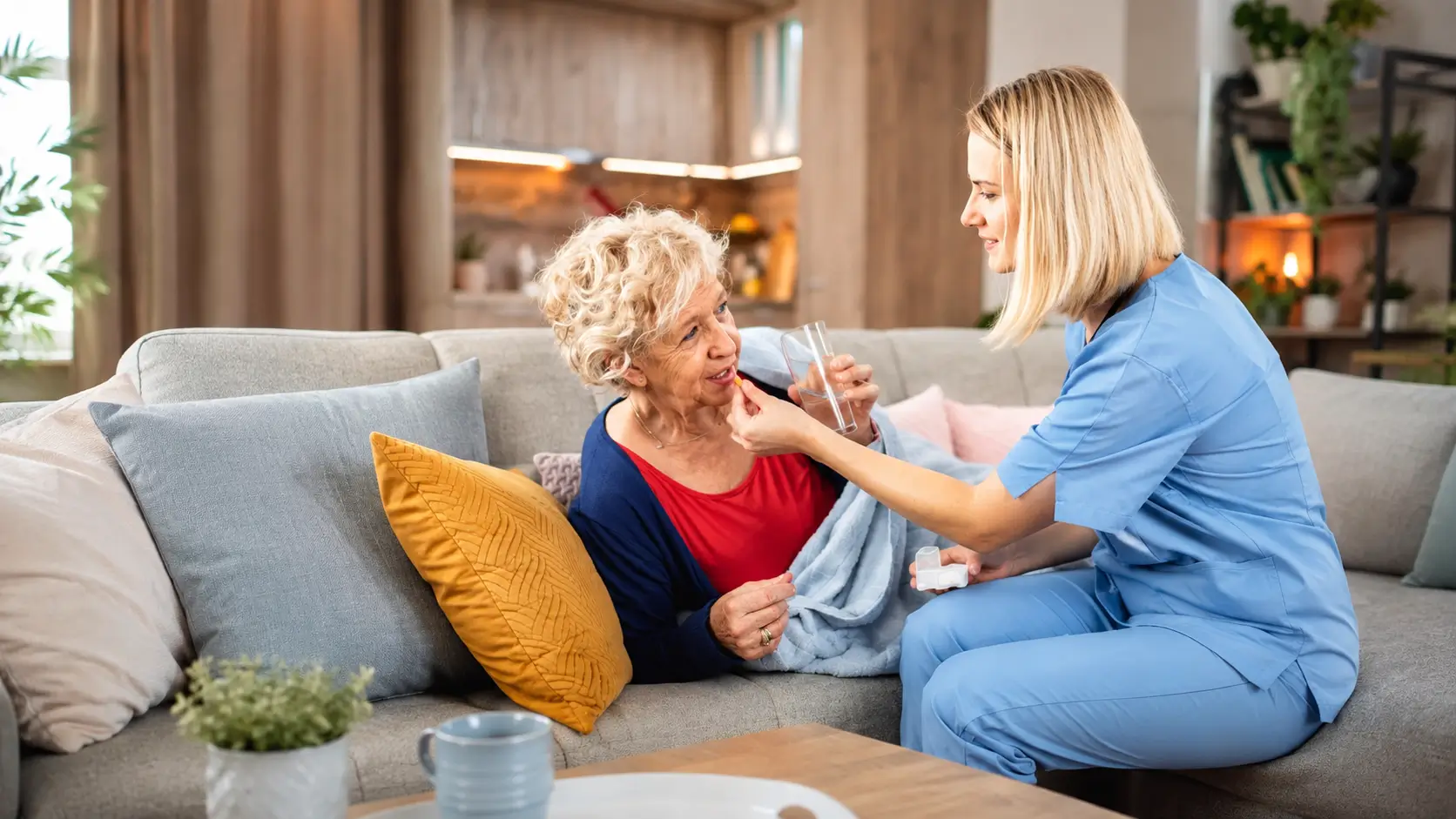
Medication timing is critical because many Parkinson's medications, particularly levodopa, must be taken on a precise schedule to remain effective, and missing or delaying doses can cause a significant increase in symptoms that affects the entire day. Learn more about how we approach this through our medication assistance service.
Communication difficulties can develop as the disease progresses, including softer speech, slower responses, and difficulty finding words, which is why our team is trained to communicate patiently and effectively rather than defaulting to the pace and assumptions that work with a general senior care population.
Non-motor symptoms such as depression, anxiety, sleep disturbances, and cognitive changes are common with Parkinson's but often go unaddressed, which is why our caregivers are trained to recognize these patterns and support clients holistically rather than focusing solely on physical assistance.
Families often wonder when in-home Parkinson's care becomes necessary. There is no single threshold, but the following are strong indicators that professional support is worth exploring:
Because Parkinson's progresses differently for every individual, we build care plans around where the person is in their journey rather than applying a one-size-fits-all approach. A personalized plan typically draws from the following services, combined in whatever proportion best fits the client's current needs:
ADL Support: Assistance with bathing, dressing, grooming, and toileting is provided with patience and full respect for the individual's dignity. For our Parkinson's clients, this means accommodating tremors, rigidity, and slower movement without rushing or adding stress. Learn more about our ADL support service.
Medication Assistance: Our caregivers provide reminders to take medications on schedule, support with organizing doses, and carefully monitor for any changes in response or side effects that should be flagged to the family or care team.
Mobility Assistance and Fall Prevention. We provide hands-on support during movement throughout the home and assist with transfers, focusing on what we do in practice to keep clients safe rather than restating the risk itself.
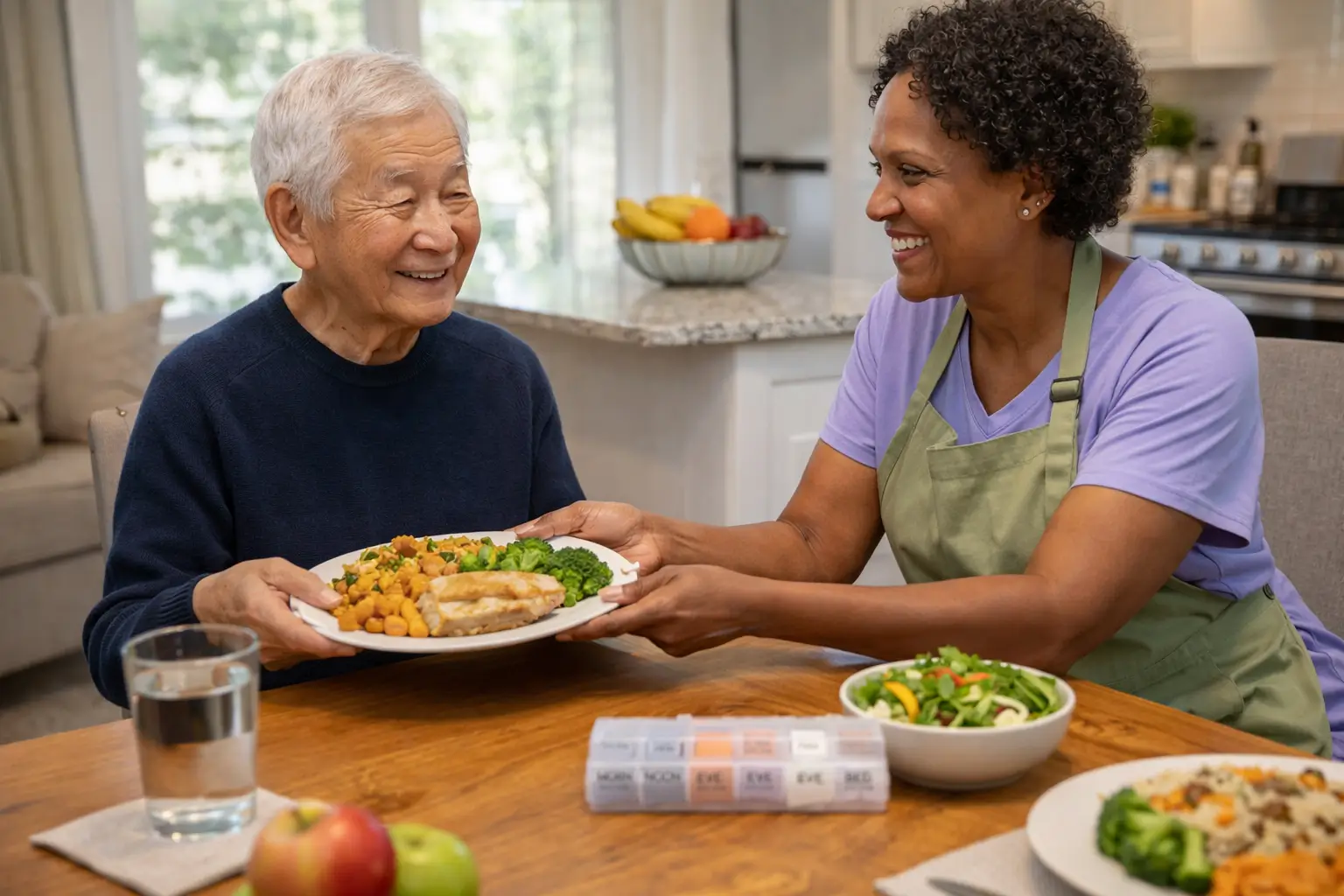
Meal Preparation and Nutrition Support. We prepare meals that account for dietary needs, any swallowing difficulties that can develop with Parkinson's, and nutritional goals that support energy and overall health. Our full meal-planning and nutrition-support service can be incorporated into any care plan.
Companion Care: Consistent companionship helps reduce the isolation and depression that frequently accompany Parkinson's. A caregiver who shows up regularly, knows the person's preferences, and engages them in meaningful conversation and activity makes a measurable difference in mood and quality of life. Learn more about our companion care service.
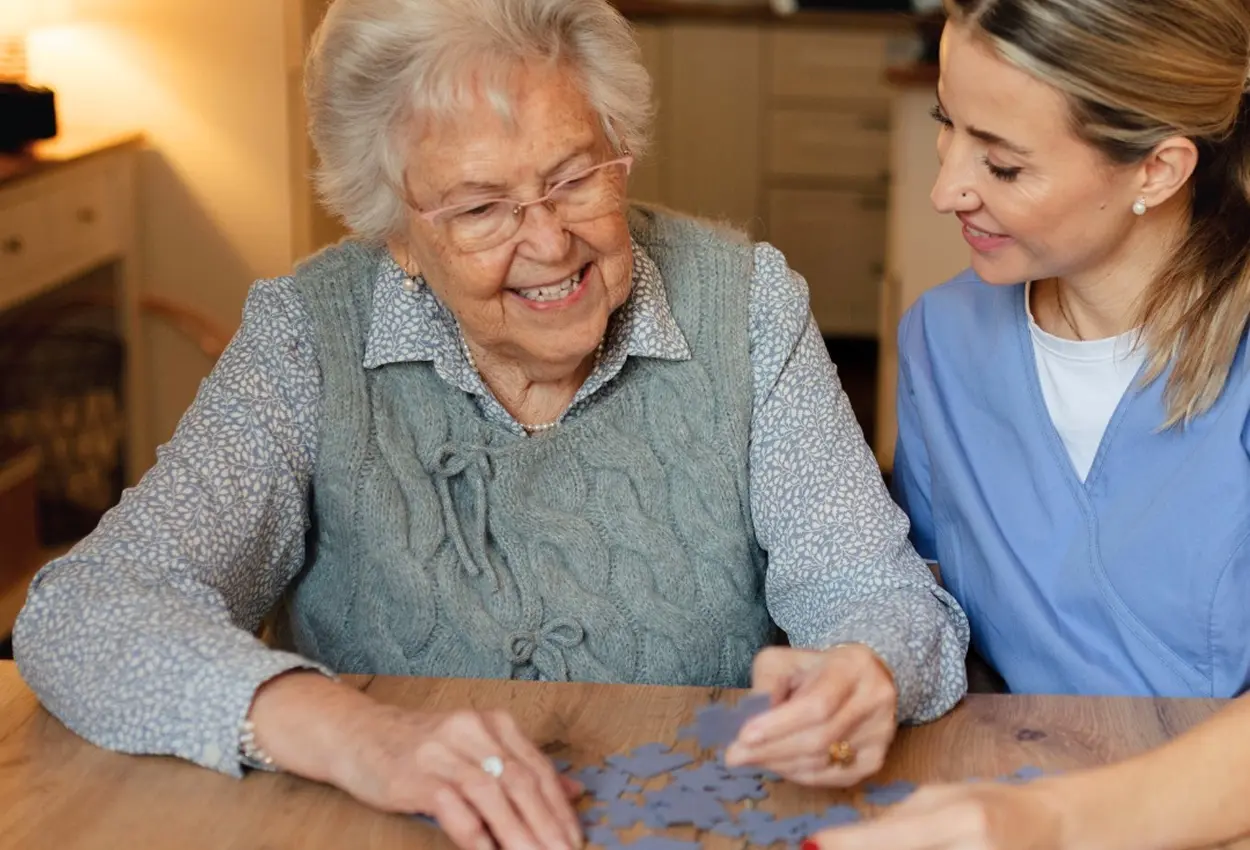
Cognitive Engagement: As Parkinson's can affect cognitive function over time, structured activities that stimulate the mind play an important role in daily well-being. Our approach to cognitive engagement is grounded in Montessori-inspired principles that encourage purposeful, interest-based activity rather than passive entertainment.
Families should plan for care needs that change over time rather than a fixed, static arrangement. A few practical considerations:
Start before a crisis. Families who put care in place proactively, before a fall or significant decline, have more time to find the right fit and build a comfortable routine gradually rather than making rushed decisions under pressure.
Expect needs to evolve. A plan that works today may need to be adjusted in six months. We build care plans that can grow with the person's needs, so families do not have to start over every time the situation changes.
Professional care supports family caregivers, too. Many families provide the majority of care themselves until exhaustion sets in. Bringing in professional support even a few days a week meaningfully reduces that burden and allows family members to show up in a relational way rather than a purely caregiving one.
With more than 25 years of experience, our team provides in-home Parkinson's care to families throughout Sacramento, Elk Grove, Folsom, Roseville, Citrus Heights, and Rancho Cordova. Our caregivers work as an extension of each client's broader care team, keeping families informed and ensuring that day-to-day observations reach the right people.
For a full overview of how we support clients living with Parkinson's, visit our in-home Parkinson's care service page.
The families we work with consistently speak to what personalized, attentive care actually feels like in practice.
"Administration is working Tirelessly to find Just the right caregiver for my son, I so appreciate the effort that's being put into this task. They are in constant communication with us. We get updates every couple of days. I was wonderful. I wish we had Found Noahs Dove and Toni sooner. It could've saved us a lot of grief."
L. Munger
"This is a company with a heart, they truly care about the families they provide care services for."
M. Otten
The right time to explore in-home Parkinson's care is before the situation feels urgent. Starting the conversation early gives your family time to find the right fit, establish a routine, and ensure your loved one is comfortable with the support we put in place.
Noah's Dove is BBB-accredited and licensed by the California Department of Social Services. We are currently offering new clients 8 free hours of professional home care. If your family is navigating a Parkinson's diagnosis and looking for compassionate, trained in-home support in Sacramento or the surrounding communities, we would welcome the chance to talk.
Schedule a free care consultation and let us help you build a plan that works.