



School Teacher
Engineer
Marketing Manager
Financial Advisor
Retired Veteran
Physician


Activities of daily living, or ADLs, are the personal care tasks most people handle every day: bathing, dressing, grooming, eating, toileting, and moving safely around the home. According to the National Institute on Aging, difficulty with these tasks is one of the primary reasons older adults lose their independence.
Our caregivers work alongside your loved one rather than taking over, offering steady support that keeps them in control of their own routines — grounded in a Montessori-inspired approach built around meaningful engagement and respect for each person's preferences.
We handle bathing and showering assistance, oral hygiene support, grooming and hair care, dressing with adaptive techniques, toileting and continence care, transfer and mobility assistance, and feeding support for seniors with hand tremors or swallowing difficulties. Each service respects individual preferences while promoting health and dignity.
We assist with full baths, showers, or sponge baths based on what your loved one is comfortable with. We check for skin changes, wounds, or signs of irritation during each session to support early identification of health concerns.
We help seniors select clothing, dress independently where possible, and maintain personal grooming habits that support their self-image and confidence. Familiar routines are preserved as much as possible.
We provide discreet, respectful support for toileting needs, continence management, and personal cleanliness. We follow each senior's care plan closely and communicate changes to families promptly.
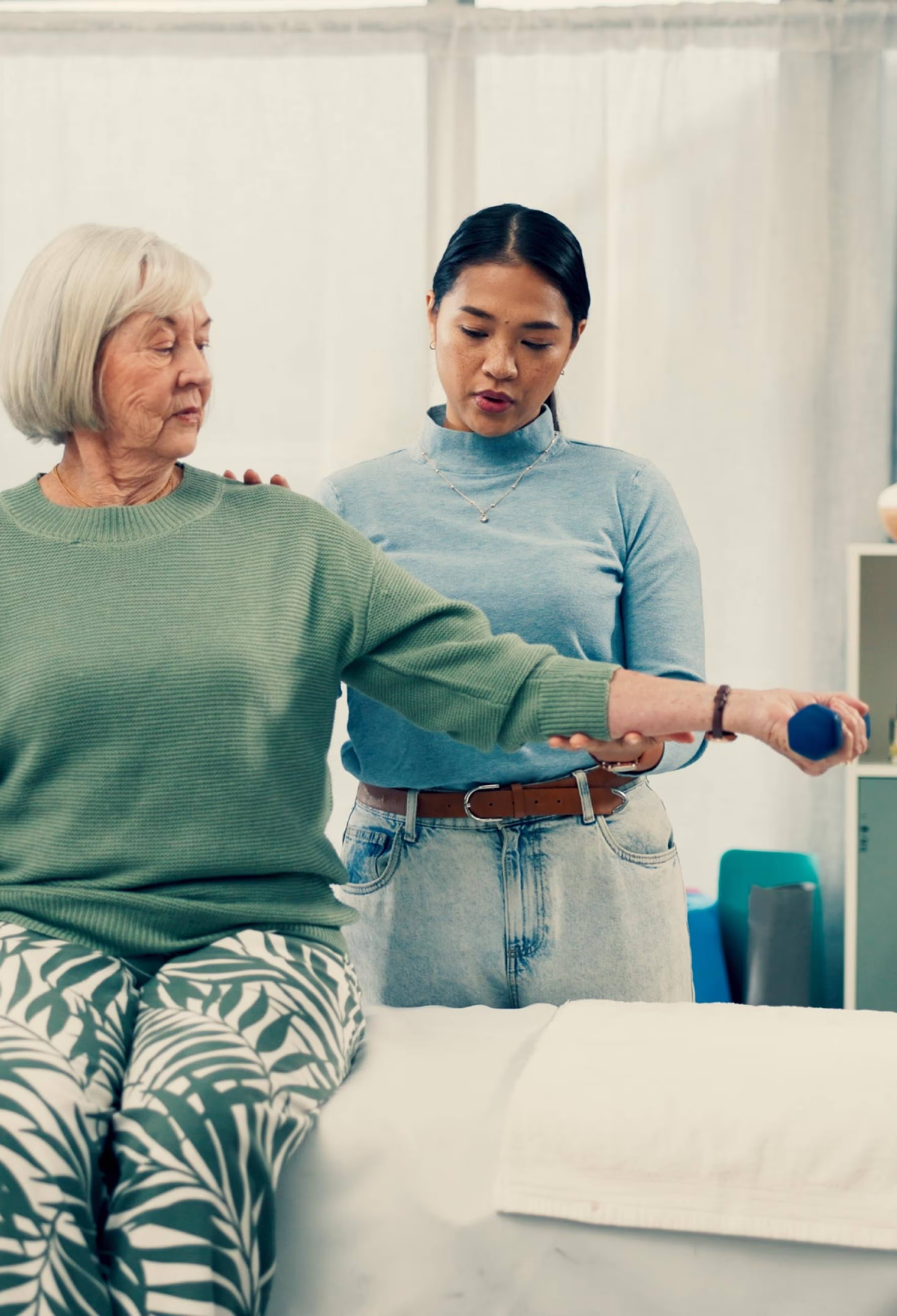
We assist with safe movement between bed, chair, and wheelchair using proper body mechanics and any necessary equipment. Reducing fall risk during transfers is a top priority for our care team.
We support seniors who need help during mealtimes, from setting up food to providing hands-on feeding assistance. This connects directly with our senior nutrition support and meals program for a complete approach to wellness.
.png)
Helping someone bathe, dress, or use the restroom requires trust that takes time to build, and our caregivers don't rush it. Before care begins, we ask detailed questions about your loved one's routines, preferences, and what they're most particular about. Those answers shape everything that follows.
We maintain consistent caregiver assignments whenever scheduling allows, because familiar faces make personal care significantly less uncomfortable, especially for seniors with cognitive changes. Families receive regular updates, and our team flags any concerns quickly so nothing goes unnoticed.

Gentle First Conversation
We listen before we plan. We ask about your loved one's current challenges, daily routines, care history, preferences, and what matters most to them. We learn about the household, the family dynamic, and any specific sensitivities that should shape how we approach personal care.
Personalized Care Plan
We build a written ADL care plan that documents every task, the preferred method for each, scheduling preferences, and special instructions. The plan is shared with the family and updated as needs change. Nothing is assumed. Everything is documented.
Caregiver Introduction and Routine Building
We introduce the assigned caregiver gradually and encourage your loved one to guide the first sessions. Routines are established at a comfortable pace. We work around existing schedules and respect the ways your loved one has always done things.
Ongoing Communication and Adjustments
Care needs shift over time. We conduct regular check-ins with families, adjust care plans as health or mobility changes, and coordinate with other care providers when needed. Our team remains available between visits for questions or concerns.
Our approach encourages seniors to stay as active and autonomous as possible during personal care routines, building confidence and preserving independence rather than creating dependency.
Our 5-Step Staff Training Program includes dedicated instruction in bathing, dressing, and personal hygiene support. These skills require both technique and sensitivity to do well.
We prioritize matching your loved one with a consistent caregiver rather than rotating staff, which builds trust and makes personal care feel far more comfortable over time.
Every client receives a documented care plan specific to their ADL needs. Instructions are clear, preferences are recorded, and families always know what to expect.
Our caregivers are trained to offer assistance without taking over. Seniors lead their routines as much as possible. We step in only where it's genuinely needed.
ADL support connects seamlessly with our nutrition, transportation, and home safety assessment services, giving families a single point of coordination for multiple care needs.
We keep families informed without overwhelming them. Regular updates, clear documentation, and direct lines of communication mean you're never guessing about how your loved one is doing.
Morning routines, evening care, weekend availability: we work around the schedule that makes sense for your family, not a generic care window.
Our ADL support services are available to families throughout Sacramento County and surrounding regions.

We adapt our approach for seniors with mild assistance needs through those requiring comprehensive personal care support across multiple ADLs each day.

Beyond ADL support, Noah's Dove provides comprehensive care to help seniors thrive at home.
Professional caregivers provide assistance with daily activities including housekeeping, meal preparation, personal hygiene and companionship. Our personalized care plans adapt to changing needs while promoting independence and dignity.
Professional evaluation of the home environment to identify fall risks and safety hazards. Detailed reports include prioritized recommendations and solutions to create a safer living space.
Personalized meal planning and preparation services address dietary restrictions, chronic conditions and personal preferences. Our nutrition support helps seniors maintain health and enjoy mealtimes.
Reliable and safe transportation for medical appointments, grocery shopping, social activities and errands. Our drivers are trained in senior mobility assistance and provide door-to-door service.
Smart home technology solutions including fall detection systems, video monitoring, emergency alert systems and perimeter cameras. Remote monitoring provides 24/7 peace of mind for families.
We provide ADL support services to families in Sacramento, Elk Grove, Folsom, Roseville, Citrus Heights, and Rancho Cordova. Our local presence means faster caregiver placement, stronger community relationships, and care built around the specific needs of Sacramento-area families.
Questions about our ADL support services? Contact us to speak with a senior care specialist.


