



School Teacher
Engineer
Marketing Manager
Financial Advisor
Retired Veteran
Physician


A senior's mental health is just as important as their physical health, yet it often receives less attention at home. A large study funded by the National Institute on Aging found that high social engagement was associated with better cognitive health among more than 7,000 adults age 65 and older, and that seniors who learned new skills showed greater memory improvement than those doing less stimulating activities. Without consistent mental stimulation, isolation and low mood can accelerate cognitive decline.
Our cognitive engagement services bring intentional activity into the daily routine through one-on-one time with trained caregivers who know how to connect with older adults. Activities are matched to each person's interests, background, and current cognitive abilities.
Our cognitive engagement services address the full range of mental and social stimulation needs for seniors at home.
We provide reminiscence activities using photos, music, and meaningful objects; word games, trivia, and reasoning puzzles calibrated to current abilities; reading aloud, storytelling, and discussion of books or personal memories; creative activities including drawing, painting, and simple crafting; music engagement through listening, singing, and rhythm-based activities; letter writing, journaling, and life history projects; strategic games such as cards, chess, and board games; sensory-based activities for seniors with advanced cognitive challenges; and gardening, cooking projects, and other hands-on purposeful tasks. Each activity is selected to reflect the individual's preferences while promoting dignity and mental wellness.
We use photographs, familiar music, and meaningful objects to help seniors revisit long-term memories, share their stories, and feel a strong sense of identity and purpose. This approach is especially effective for seniors with memory loss.
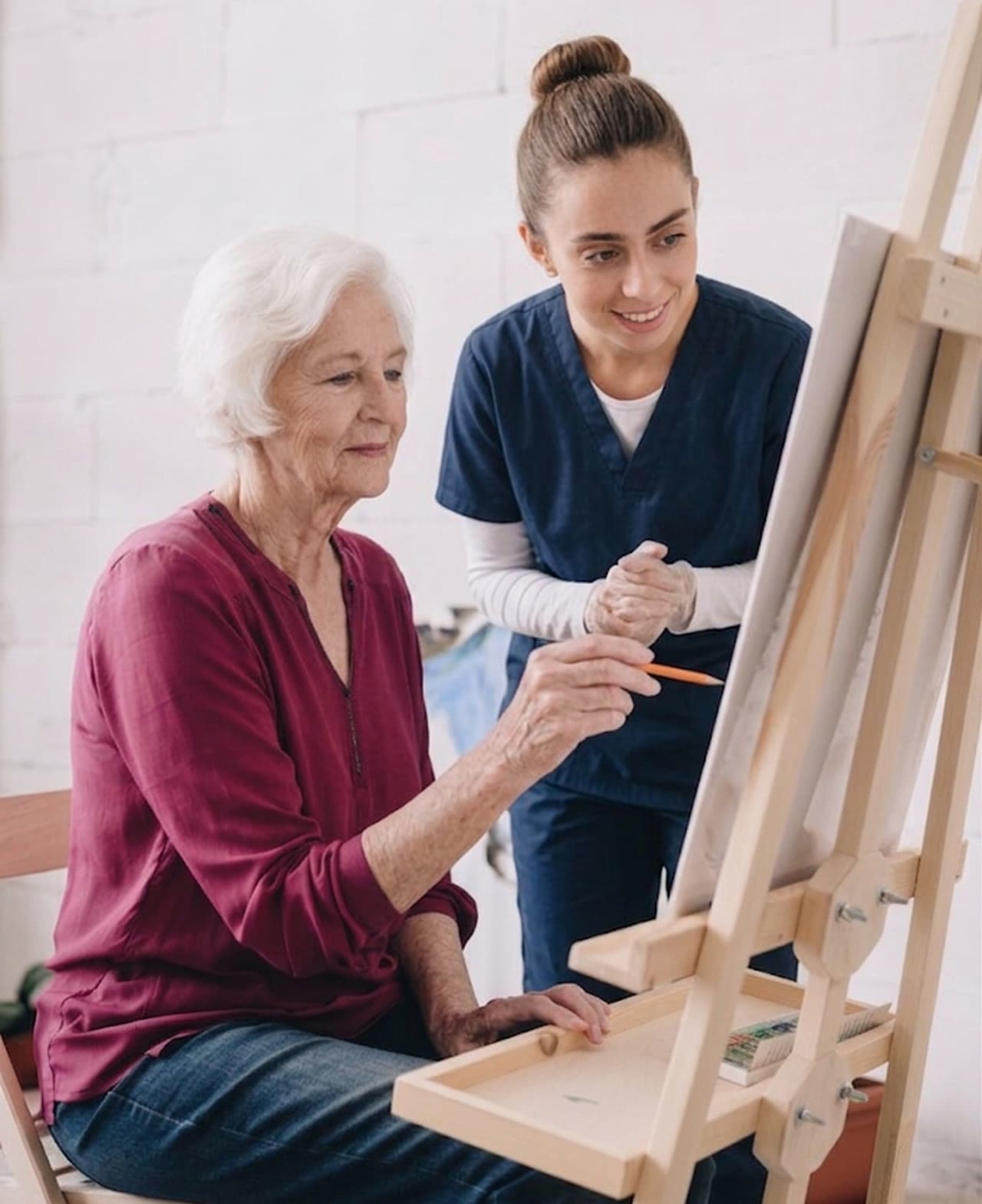
Art, music, and hands-on projects give seniors a way to communicate, create, and feel accomplished regardless of verbal or physical limitations. Caregivers adapt activities based on what each person can comfortably do and enjoys.
Word games, trivia, puzzles, and card games are selected based on current cognitive ability rather than a generic difficulty level. The goal is appropriate challenge, not frustration. Progress and preferences are documented and adjusted over time.
Meaningful back-and-forth conversation is one of the most cognitively demanding and rewarding activities available to seniors. Our caregivers are trained to ask thoughtful questions, listen actively, and respond in ways that keep conversations going rather than shutting them down.
Seniors stay more engaged when activities feel useful, not just recreational. Folding laundry, sorting items, preparing simple foods, and tending to plants all provide gentle cognitive stimulation while preserving a sense of contribution and capability. This approach aligns naturally with our in-home care services.

A crossword puzzle means nothing to someone who never enjoyed word games. A vegetable garden, on the other hand, might light up a senior who spent decades growing their own food. Getting this right takes time and genuine curiosity about who someone is.
Before any activities begin, we learn about the senior's life history, past hobbies, professional background, religious practices, cultural traditions, and what they find amusing or interesting. That portrait guides every session. As abilities and interests shift, caregivers adapt rather than sticking to a fixed program.

Getting to Know Your Loved One
We ask families and seniors directly about hobbies, favorite music, cherished memories, past work, and the kinds of activities that have always brought joy. This intake shapes an engagement profile that informs every interaction.
Personalized Activity Plan
We build a written activity plan that outlines specific activities, the rationale for each, scheduling preferences, and any known triggers or sensitivities to avoid. The plan is shared with families and updated as the senior's interests and cognitive status evolve.
Consistent Sessions With a Familiar Caregiver
Cognitive engagement works best with a caregiver the senior knows and trusts. We keep assignments consistent so sessions develop their own rhythm. Comfort with the caregiver lowers resistance and opens the door to deeper participation over time.
Observation, Reporting, and Adjustment
Caregivers note what resonates and what falls flat after each session. Families receive regular updates, and the activity plan is adjusted accordingly. Noticeable changes in mood, alertness, or cognitive behavior are flagged and communicated promptly.
The Montessori method prioritizes purposeful activity, autonomy, and connection with one's environment. Our caregivers apply these principles to cognitive engagement so seniors participate with intention rather than simply passing time.
We do not use generic activity kits. Every plan starts with who the senior is: their background, interests, personality, and what they have always found meaningful.
Our caregivers receive instruction in how to communicate with and engage seniors experiencing memory loss, confusion, and behavioral changes. They know how to redirect without frustration and how to meet the senior where they are.
Familiarity matters in cognitive engagement. A senior is far more likely to participate, open up, and enjoy activities with someone they recognize. We minimize caregiver rotation to protect that relationship.
Every client has a written engagement profile and activity log. Families can see what is being done, what is working, and how their loved one is responding across visits.
Cognitive engagement does not exist in isolation. We connect it with our broader care approach, including senior nutrition support and meals, because a well-nourished brain is better positioned to benefit from stimulation.
Some seniors do best with shorter, more frequent check-ins. Others benefit from longer, focused sessions. We structure visit length and scheduling around what keeps your loved one at their most engaged.
Families who want to participate in activities during visits are always welcome. We can also coach family members on engagement techniques so stimulating interaction continues between scheduled care visits.
Our cognitive engagement services are available to families throughout Sacramento County and surrounding regions.

We calibrate engagement activities for seniors across a wide range of cognitive abilities, from those who are fully independent but lonely to those who require significant support during every session.

Beyond dementia care, Noah's Dove provides comprehensive support to help seniors thrive at home.
Professional caregivers provide assistance with daily activities including housekeeping, meal preparation, personal hygiene and companionship. Our personalized care plans adapt to changing needs while promoting independence and dignity.
Professional evaluation of the home environment to identify fall risks and safety hazards. Detailed reports include prioritized recommendations and solutions to create a safer living space for seniors with memory loss.
Personalized meal planning and preparation services address dietary restrictions, chronic conditions and personal preferences. Our nutrition support helps seniors maintain health and enjoy mealtimes.
Reliable and safe transportation for medical appointments, grocery shopping, social activities and errands. Our drivers are trained in senior mobility assistance and provide door-to-door service.
Smart home technology solutions including fall detection systems, video monitoring, emergency alert systems and perimeter cameras. Remote monitoring provides 24/7 peace of mind for families.
We provide cognitive engagement services to families in Sacramento, Elk Grove, Folsom, Roseville, Citrus Heights, and Rancho Cordova. Our caregivers bring activities directly into the home, removing barriers like transportation or unfamiliar group settings that can make participation difficult for older adults.
Questions about our cognitive engagement services? Contact us to speak with a senior care specialist.


