


New Clients:
Get 8 FREE Hours of Professional Home Care

.webp)
Get 8 FREE Hours of Professional Home Care
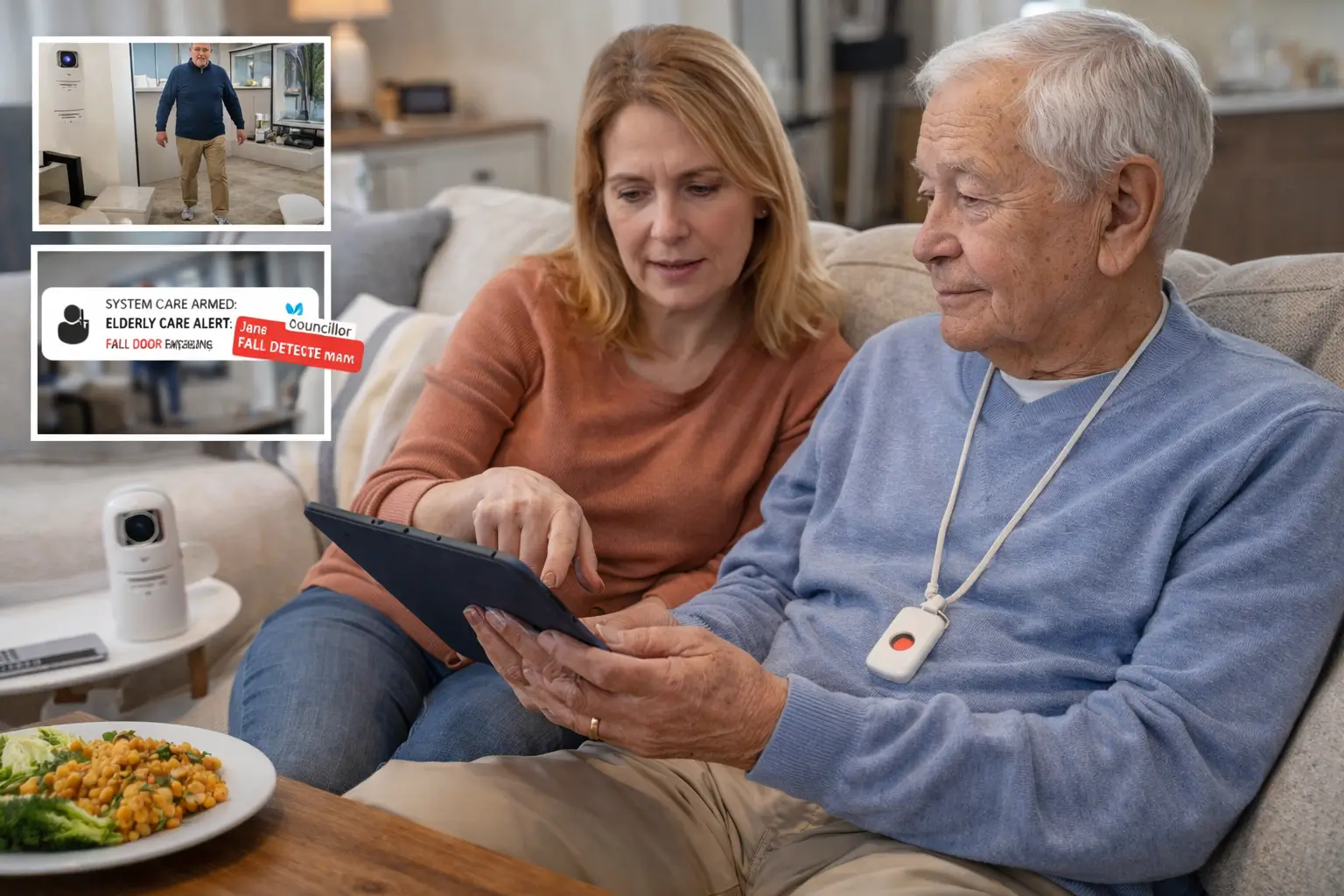
According to the National Council on Aging, one in four Americans age 65 and older falls each year. Many of those falls happen when no one is nearby to help. For families with aging loved ones living alone, that reality is hard to ignore.
Between work schedules, physical distance and the demands of daily life, few families can watch over a senior parent or grandparent around the clock. A fall, a wandering episode or an unexpected shift in routine can lead to serious consequences if no one is there to notice. Digital home monitoring addresses that gap by providing early alerts and giving families peace of mind without taking away a senior's independence.
Noah's Dove offers digital home monitoring solutions built around safety, risk reduction and independence for Sacramento-area seniors.
When a senior lives alone, small problems can go unnoticed long enough to become emergencies. A missed meal, an unusual period of inactivity or a fall in the hallway may not seem alarming at first, but hours without a response can change the outcome.
Digital monitoring picks up on those warning signs in real time. Alerts go directly to caregivers and family members, and routine tracking can flag shifts in sleep, mobility or appetite that might point to a developing health issue. Catching these patterns early has been shown to reduce hospitalizations and delay the need for more intensive care.
For many families, pairing a monitoring setup with in-home care services builds a stronger safety net than either approach alone.
Most systems combine several tools that track safety, mobility and daily habits without intruding on personal space.
Together, these tools create a home environment where risks are caught quickly rather than discovered after the fact. Sacramento families interested in technology-driven safety solutions can learn more about digital monitoring and security systems from Noah's Dove.
One of the first questions families ask is if a monitoring system will make their loved one feel watched. It is a fair concern, and the answer usually comes down to how the system is designed.
Most modern setups use discreet sensors rather than cameras. They track motion, temperature and sound to detect emergencies without recording video footage. An alert is only sent when something falls outside a normal routine, so the system acts as a safety backup rather than a form of surveillance.
That distinction matters. Seniors who feel their privacy is respected are far more likely to accept the technology willingly. When the conversation is framed around cooperation rather than control, resistance tends to drop. A professional home safety assessment can also help families figure out the best sensor placement so the system stays effective without being intrusive.
Speed makes a real difference in senior safety. A fall that goes unnoticed for several hours carries a much higher risk of complications than one that gets an immediate response.
Digital alerts close that window. If a senior falls or stays inactive for too long, caregivers get a notification right away, even if they are across town. The same goes for missed medications, unusual movement patterns or sudden changes in daily behavior. Spotting these shifts early gives families a chance to step in before a situation escalates to an emergency room visit.
Pairing alerts with senior care referral services makes it easier to connect the right resources to a specific concern as it arises.
The goal is not to put a senior under a microscope. It is the opposite: monitoring gives older adults the freedom to stay at home longer because risks are being tracked in the background.
Families worry less because they know a system is in place. Seniors, in turn, feel more confident going about their day because help is available the moment something goes wrong. That kind of reassurance goes a long way toward preserving daily routines and the sense of stability that comes with aging in a place you know well.
Yes, and it often works best when it is part of a broader care plan rather than a standalone tool.
Monitoring data can inform caregiver visit schedules, flag changes in kitchen activity relevant to senior nutrition support and meals and back up safety evaluations with real behavioral data. When a senior leaves the home for an appointment, the system complements senior transportation services by confirming safe departures and returns. Caregivers reviewing the data can then adjust care priorities and catch emerging concerns before they grow.
"The ring camera doorbell and camera systems are easy to install and provide seamless technology to enable family members to view motion-activated cameras. An affordable option to give loved ones peace of mind."
Noah Barnes
Noah's Dove is a trusted Sacramento provider of privacy-respectful digital monitoring services for seniors. Our systems are built around activity tracking that supports independence, sensors that respect personal space, real-time caregiver alerts and direct integration with our in-home care team.
If your family is ready to take the next step, schedule your digital home monitoring consultation today.


